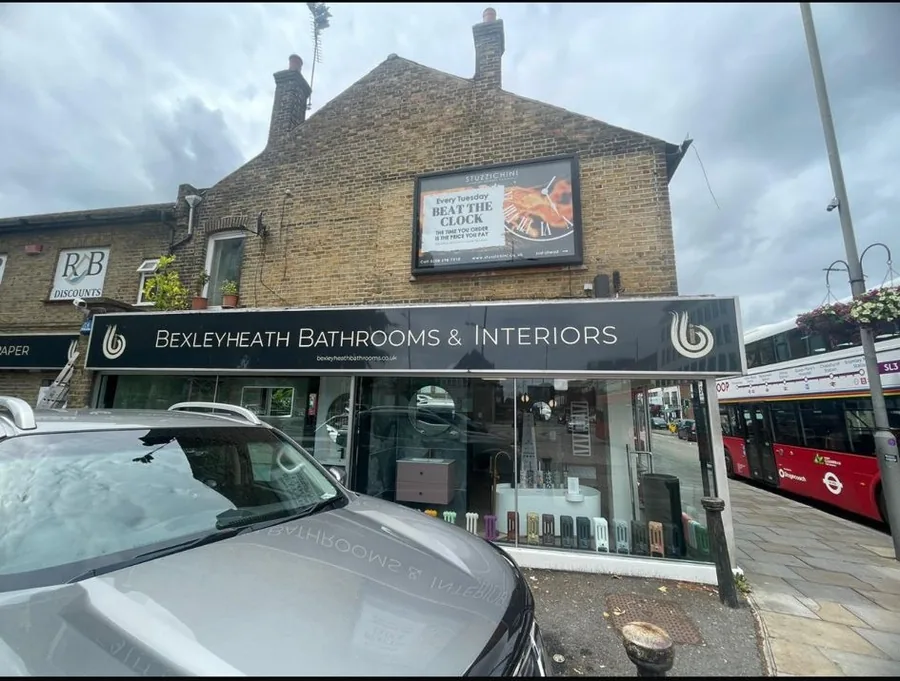
One of the things that catches business owners off guard when they're getting a new shop sign is the question of planning permission. Do you need it? Will the council come knocking if you just get it put up? The answer depends on a few factors — and it's less complicated than most people think. Let me walk you through how it actually works, particularly for businesses in London, Kent, and the wider South East.
The short version: Most standard, non-illuminated shop front fascia signs in England don't require planning permission. But there are conditions — and if you're in a conservation area or a listed building, the rules are considerably stricter.
The Legal Framework
Shop front signs fall under advertisement control in England, which is governed by the Town and Country Planning (Control of Advertisements) Regulations 2007. Under these regulations, all outdoor advertisements technically need consent — but many signs qualify for what's called "deemed consent," which means permission is automatically granted without you needing to apply for it, provided the sign meets certain criteria.
This is the bit that trips people up. Deemed consent isn't a free-for-all — you still have to meet the conditions, you just don't have to submit a planning application to do so.
When Does a Shop Sign Have Deemed Consent?
For a standard fascia sign to benefit from deemed consent, it generally needs to meet all of the following:
- It doesn't project more than 1 metre from the building's surface
- The top edge is no higher than 4.6 metres above ground level
- It relates to the business being carried out on those premises
- It doesn't obstruct traffic signs, railway signals, or other official signage
- It doesn't create a safety hazard for pedestrians or road users
- It's not illuminated by flashing or intermittent lighting
- You have permission from the site or building owner
If your sign ticks all those boxes, you generally don't need to submit an advertisement consent application. You can simply get it made and installed.
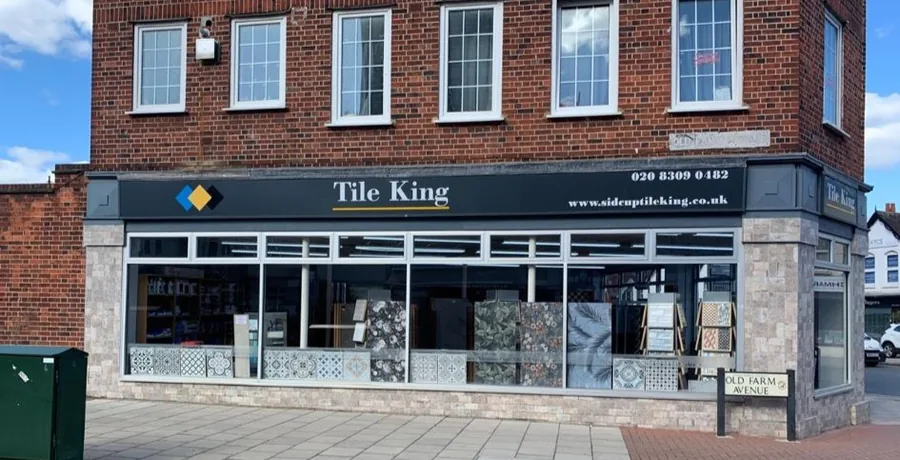
Tile King, Sidcup — a straightforward fascia sign that falls comfortably within deemed consent.
When Do You Need to Apply for Advertisement Consent?
There are situations where deemed consent doesn't apply and you do need to make a formal application to your local planning authority. These include:
- The sign's top edge is above 4.6 metres from ground level
- The sign is illuminated with moving, flashing, or variable lighting
- You're in a conservation area (see below — this is important)
- The premises is a listed building
- The sign is on a gable end of a building
- The sign is larger than the standard deemed consent limits
Advertisement consent applications go to your local council's planning department. In London boroughs, that's the relevant borough council. In our main area — Bexley, Dartford, Gravesham — it's those respective councils. The application fee is typically around £100-120, and most decisions come back within eight weeks. Some local authorities offer a pre-application advice service if you want to check something before committing.
Important: Even if your sign has deemed consent, you still have to comply with the five standard conditions that apply to all outdoor advertisements — keeping it safe, maintained, and not blocking official signs. These apply regardless of whether formal permission is needed.
Conservation Areas — Extra Care Required
This is where things get noticeably more restrictive. London and the South East have a significant number of conservation areas — places where the local authority has determined that the historic or architectural character needs protecting. In these areas, the rules around signage are much tighter.
In a conservation area, even a fairly standard fascia sign may not qualify for deemed consent and may require advertisement consent. The council will typically expect:
- Traditional materials — painted timber, non-reflective metal, or high-quality acrylic
- Proportionate size — signs that respect the scale of the building and street
- Discreet illumination — trough lighting or LED downlighters rather than internally illuminated box signs
- A design that complements the character of the area rather than clashing with it
Before you commission anything in a conservation area, it's worth a quick call to the planning department. Most will give you a steer on whether consent is needed and what they'd expect to see. Getting that conversation out of the way before you spend money on a sign you then have to change is well worth five minutes of your time.
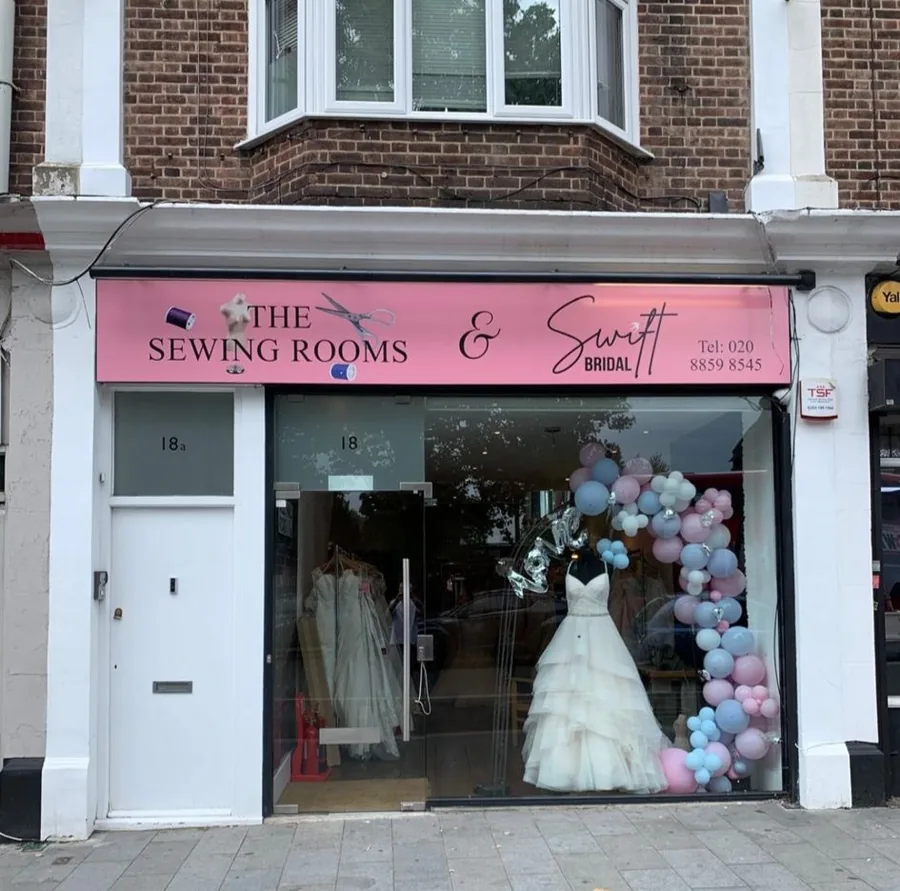
The Sewing Rooms & Swift Bridal — a fascia that works well within the character of its high street setting.
Listed Buildings
If your premises is a listed building, you need listed building consent for any alteration that affects its character — which includes signage in most cases. This is separate from advertisement consent and comes with stricter requirements around materials and methods of fixing. Screwing into original historic masonry, for example, is something councils are very unlikely to approve. We've worked on signage for listed premises before and the key is always to work with fixings and materials that are reversible and don't damage the fabric of the building.
What About Window Graphics and A-Boards?
Window graphics are generally straightforward — vinyl applied to the inside of a window typically doesn't require any consent at all, since it's not technically an outdoor advertisement. External window vinyl and frosted film applied directly to the glass surface usually falls within deemed consent as part of the fascia advertisement, provided it relates to the business on the premises.
A-boards and pavement signs are a slightly different matter. They're technically classed as advertisements on the public highway and need both advertisement consent and permission from the highway authority. In London, many boroughs have specific local policies on A-boards. Some don't permit them at all in busy areas; others allow them under a pavement licence scheme. It's worth checking with your local council before putting one out.
Size — What Actually Looks Right
This is something I'd add separate from the legal requirements, just from years of doing this. There's a temptation when you're getting a new sign to go as big as possible. In most cases that's not actually what makes a sign effective. A well-proportioned sign that fits the fascia properly, in the right colours and typeface for your brand, will have far more impact than something oversized that looks crammed in or overwhelming.
As a rough guide that many local authorities also follow: for smaller shops, a fascia height of around 40-50cm works well. For larger premises, up to 80cm. Width is typically 40-70% of the total shopfront width. These aren't hard rules for deemed consent purposes, but they're a good starting point for what actually looks balanced and professional.
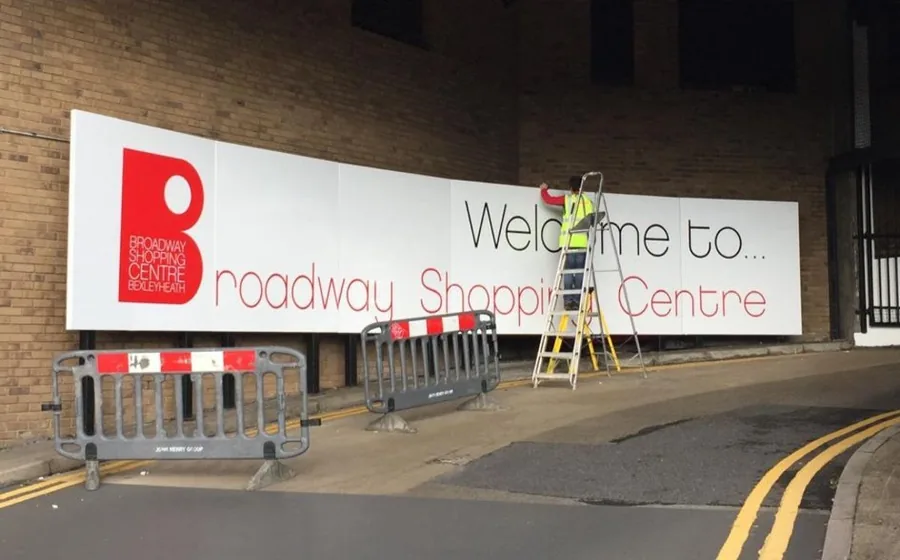
Broadway Shopping Centre, Bexleyheath — large format signage where scale and proportion were carefully considered alongside planning requirements.
Quick Checklist Before You Install a Shop Sign
Before your sign goes up:
- Check if your premises is in a conservation area — use your local council's planning portal
- Check if your building is listed — search the National Heritage List for England (historicengland.org.uk)
- Confirm the sign's top edge is below 4.6 metres from ground level
- Confirm you have permission from your landlord or building owner
- If illuminated, check the type of illumination — no flashing or moving lights without consent
- If in doubt, contact your local planning authority before spending money
- Ask your sign installer — a reputable one will know the local requirements and flag any issues
What Happens If You Get It Wrong?
The council's first response to an unauthorised sign is generally to contact the owner and invite them to either apply for retrospective consent or remove the sign. Outright enforcement action — fines, forced removal — tends to be reserved for signs that are genuinely causing a problem or where the owner is uncooperative. That said, it's a hassle you don't need, and retrospective applications carry no guarantee of approval.
The straightforward approach is to check the rules before you install, not after. As your sign writer, I'll always flag if I think something might need consent — it's part of the service and it's in everyone's interest to get it right from the start.
Ready to Get Your Shop Front Sorted?
We handle everything from design through to installation — and we'll always advise you upfront if planning consent is likely to be needed for your location.