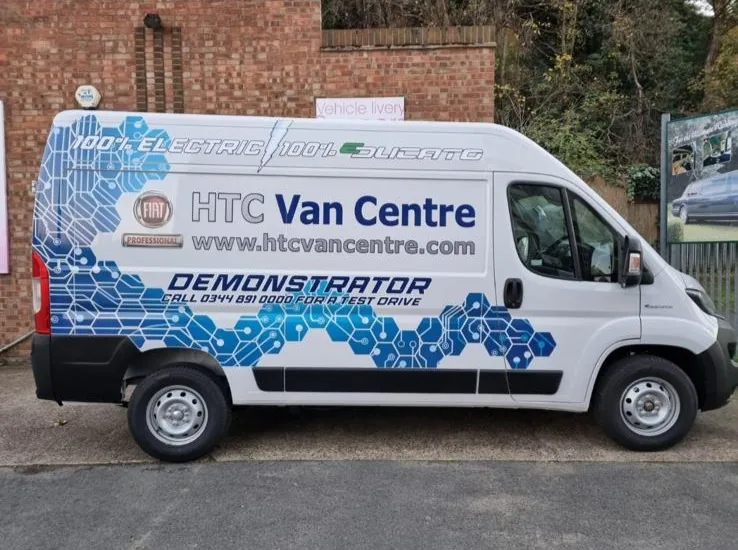
Before anyone commits to a vehicle wrap, the first question is nearly always the same: how long is it going to last? It's a fair question — you're spending money on it, you want to know what you're getting. The honest answer is that done properly, with the right materials and a decent installer, you should comfortably get five to seven years out of a commercial vehicle wrap. But there's quite a bit that sits behind that number, and it's worth understanding what actually affects lifespan before you spend anything.
The Material Makes the Biggest Difference
Not all vehicle wrap vinyl is the same, and this is probably the single most important factor in how long your wrap lasts. There are two main types of vinyl used in vehicle wrapping: cast and calendered.
Cast vinyl is the professional standard. It's made through a different manufacturing process that results in a thinner, more flexible film that conforms to the contours of a vehicle — curves, door handles, bumper edges — without stretching or cracking. It's engineered to last, typically five to seven years, and it's what we use on every vehicle wrap we do.
Calendered vinyl is cheaper to produce. It's thicker and stiffer, which sounds like it should be more durable but isn't — it doesn't flex well with the vehicle over time, particularly on curved surfaces, and tends to lift at edges and crack. It's fine for flat panels and short-term applications, but on a full vehicle wrap it's a false economy. You might save a couple of hundred pounds upfront and find yourself replacing it in three years instead of seven.
Worth asking: When you're getting quotes for a vehicle wrap, always ask what vinyl brand and type is being used. Reputable installers will specify premium brands. If someone's quoting well below everyone else and can't tell you what material they're using, that's a red flag.
Realistic Lifespan by Vehicle Type and Use
| Vehicle Type / Use | Expected Lifespan | Key Factor |
|---|---|---|
| Commercial van — regular use, garaged overnight | 5–7 years | Garaged = less UV exposure |
| Commercial van — outdoor parking, heavy use | 4–6 years | UV and weather exposure |
| Fleet vehicles — high mileage | 4–6 years | Road debris, frequent washing |
| Car graphics — full or partial wrap | 5–7 years | Often garaged, lower mileage |
| Lorry curtain or panel graphics | 5–7 years | Vertical surfaces last longer |
| Budget calendered vinyl wrap | 2–3 years | Material quality |
The UK Climate Is Actually Kind to Wraps
One thing worth knowing is that Britain's weather, frustrating as it is, is actually fairly moderate in terms of what it does to vehicle wraps. Extreme heat bakes vinyl and accelerates ageing. Deep freezes cause cracking. The UK rarely does either to any serious degree, which means wraps installed here generally perform very well compared to, say, vehicles operating in the Middle East or Scandinavia.
The main UK-specific factor is road salt in winter. It gets into the edges of wraps and, over time, can weaken the adhesive bond if the vehicle isn't washed regularly. We'd always recommend hand washing the vehicle at least twice a month through winter months — more on that below.
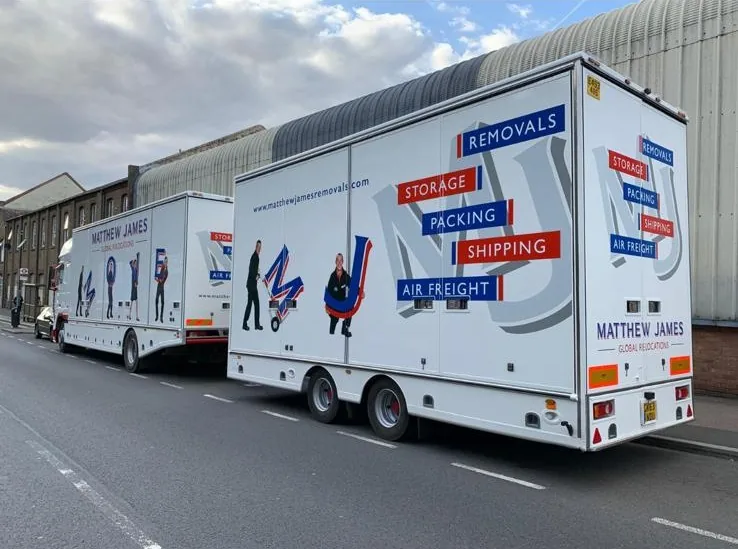
Matthew James Removals fleet — large format lorry graphics holding up well in regular UK road conditions.
Horizontal vs Vertical Surfaces
Something most people don't think about: the roof and bonnet of a vehicle will always age faster than the doors and sides. These horizontal surfaces take the full force of UV rays, collect standing water, bird droppings, and all the other things that degrade vinyl faster. It's not unusual for the side panels of a wrap to look perfectly good while the roof is starting to fade. If your wrap covers the roof, factor that in when assessing its overall condition.
Installation Quality Matters as Much as Materials
A premium vinyl wrap applied poorly will fail early. It's that simple. The vinyl needs to be applied in a clean, temperature-controlled environment — dust and contamination trapped under the film create weak spots where bubbles and peeling start. Edges need to be properly finished and heat-set so they don't lift. Recesses and curves need to be worked carefully without over-stretching the material.
We always fully clean and chemically decontaminate vehicles before wrapping. You'd be surprised how much invisible contamination sits on a vehicle's paintwork even after a regular wash. Getting that off is what allows the adhesive to bond properly and stay bonded for the full lifespan of the wrap.
DIY wrapping: It's possible on flat panels if you're patient and have the right tools. But on a full vehicle with curves and recesses, poor application is the most common reason wraps fail early. For commercial vehicles where the wrap is your advertising, it's nearly always worth getting it done professionally.
How to Get the Most From Your Wrap
Once your wrap is on, how you look after it genuinely makes a difference to how long it lasts. A few simple habits extend lifespan significantly:
- Hand wash where possible — automated car washes with stiff rollers cause micro-scratches and can lift edges. A hand wash with a gentle vehicle shampoo is far better.
- Don't pressure wash at edges — if you do use a pressure washer, keep it away from the wrap edges and use it at an angle rather than directly on the surface.
- Clean off contamination quickly — bird droppings, tree sap, and fuel spills can all etch into vinyl if left to sit. Get them off as soon as you notice them.
- Park in shade when you can — UV is the main enemy of vinyl longevity. A garaged vehicle or one regularly parked in shade will noticeably outlast one that bakes in full sun every day.
- Inspect the edges periodically — if you catch a lifting edge early it can often be re-bonded. Leave it and moisture gets underneath and the damage spreads.
When Should You Replace a Wrap?
The honest answer is: before it starts looking rough, not after. A wrap that's peeling, heavily faded, or cracking is doing the opposite of what it's supposed to — instead of making your business look professional, it's making it look neglected. That's worse than no wrap at all.
At the five-year mark it's worth getting a professional eye on it. Some wraps are still looking great at seven years and beyond. Others will have had a harder life and need refreshing. We offer an inspection and assessment service — often a partial refresh of the panels that have fared worst is a more cost-effective option than a full rewrap.
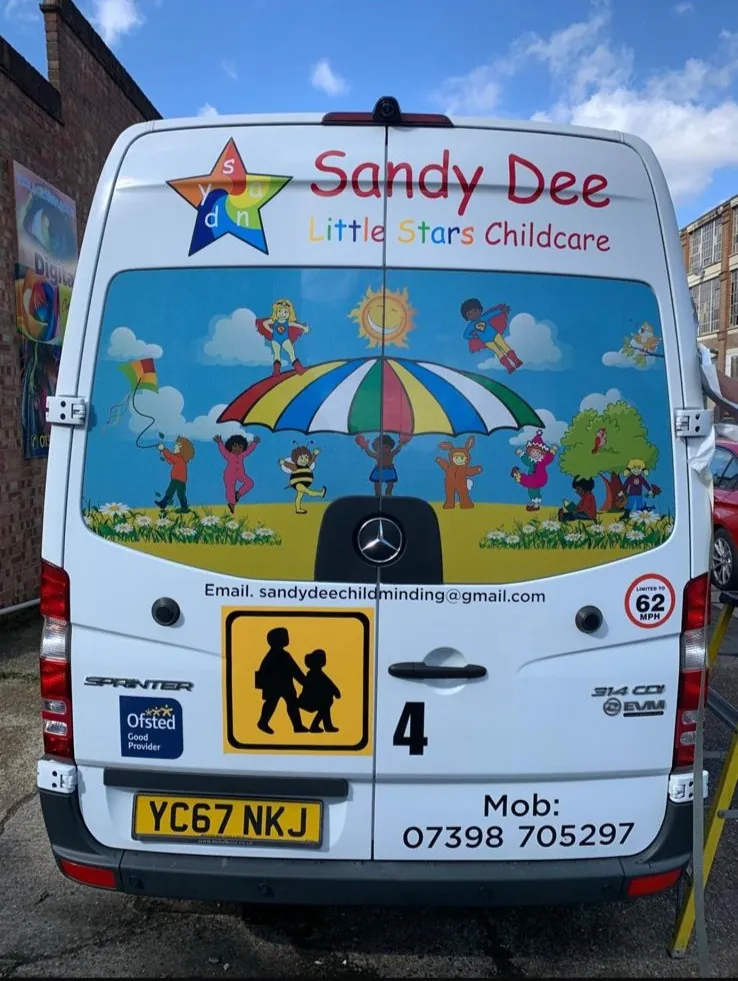
Full rear wrap on a Sandy Dee Little Stars Sprinter — bold graphics designed to stay looking sharp for years.
Is a Vehicle Wrap Worth It?
On pure cost-per-impression terms, a vehicle wrap is one of the most cost-effective forms of advertising available to a small business. A single branded van driving around London generates thousands of impressions a day, in the exact areas you're working. Spread that over five or six years and the cost per impression is genuinely tiny compared to pretty much any other advertising channel.
For a commercial vehicle that's out on the road every day, the answer is almost always yes — provided it's done properly with decent materials. A cheap wrap that looks tatty within two years costs you more than it saves.
Thinking About Wrapping Your Van or Fleet?
We'll talk you through the options, give you honest advice on materials, and provide a transparent quote. No pressure.